입력 2025.09.30 15:44
- Establishing an Academic and Cultural Bridge Between Korea and the Turkic World
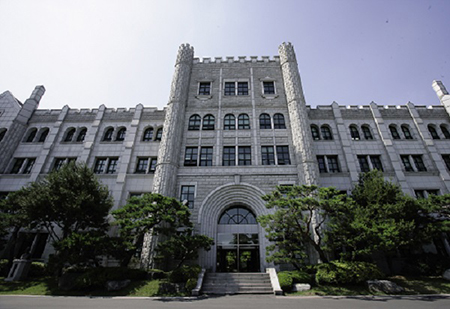
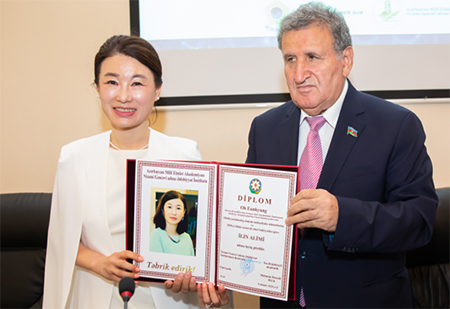
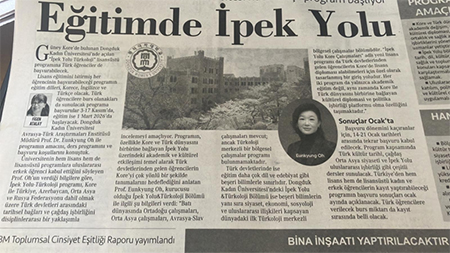
Seoul, March 1, 2026 — Dongduk Women’s University (President Kim Myung-ae) announced the simultaneous establishment of the world’s first graduate program in comprehensive Turkic Area Studies, the “K-Silkroad Turkic Studies Department,” and the undergraduate “Silkroad Korean Studies Track” within its International College. This initiative has drawn considerable attention in academia, as it marks a decisive step for Korean humanities to move beyond Western-centered academic frameworks and to build an independent intellectual foundation, while also connecting Korea and the Turkic world through a new international education model.
■ The World’s First Department for Area Studies of Turkic Countries
In Western academia, fields such as Middle Eastern Studies, Central Asian Studies, and Slavic or Eurasian Studies are well developed. Yet no program has ever existed that centers on Turkology while also encompassing politics, economics, society, and international relations. Even within the Turkic world, most scholarship has remained confined to language and literature.
The K-Silkroad Turkic Studies Department at Dongduk Women’s University overcomes these limitations by integrating the humanities with the social sciences, creating the first truly comprehensive program of its kind worldwide. It is regarded as a pioneering model not only in Korea but across global academia.
■ Scholarly Leadership and the Originality of Korean Humanities
The establishment of these programs has been spearheaded by Prof. Dr. Eunkyung OH, the scholar who led the compilation of the world’s first Encyclopedia of Turkology and the Humanities. Prof. OH earned her M.A. and Ph.D. in Türkiye in 1999, became the first foreigner to be awarded the Doctor of Science in the Humanities in Uzbekistan in 2014, and in 2016 founded the “Institute of Eurasian Turkic Studies,” the first and only research institute dedicated to Turkology in Korea.
Prof. OH describes the encyclopedia project as one of her proudest achievements. It was not a mere compilation of terms and references, but rather a demonstration of the vitality of Korean humanities to the world. For too long, academic systems have been dependent on Western frameworks. Through the Encyclopedia of Turkology, she sought to show that Korean humanities can establish their own independent system of inquiry and methodology, transforming Korea from a passive recipient of scholarship into an active creator of new academic structures.
Furthermore, Turkology goes beyond conventional regional studies. Korea and the Turkic world share deep historical and cultural affinities, and thus Turkology is crucial for broadening the foundation of Korean Studies. It also holds significant potential for practical application in politics, economics, and diplomacy. The launch of the K-Silkroad Turkic Studies Department institutionalizes this vision at the highest academic level.
■ The International Significance of the Silkroad Korean Studies Track
The Silkroad Korean Studies Track, established in the International College, enables students from Turkic universities majoring in the humanities to obtain a bachelor’s degree in Korea. Students may complete the program through 2+2 joint degree arrangements or by transferring into the fourth year, earning degrees in Korean Language & Literature or Korean Culture. They may then continue into the graduate-level K-Silkroad Turkic Studies Department.
This is the first global initiative to connect Turkology with Korean Studies. By studying Korea from the perspective of their own cultural traditions, Turkic students can conduct original comparative literature and comparative culture research, thereby expanding the international reach of Korean Studies and advancing it in creative and multidimensional ways.
■ Openness and Accessibility in Program Operations
The K-Silkroad Turkic Studies Department is open to Korean and international students, both men and women. Special consideration has also been given to working professionals. By offering evening and weekend classes, the program allows students to balance their academic and professional lives, thereby building an open and inclusive academic community.
■ A Platform for Cultural Diplomacy
The programs are more than academic initiatives; they are strategic cultural and diplomatic platforms linking Korea and the Turkic world. Korea and the Turkic states share a history of exchange through the Silk Road, yet in modern times this connection has been disrupted and insufficiently studied. By institutionalizing both Turkology and Korean Studies in one framework, the programs open pathways for mutual understanding, academic collaboration, and strengthened diplomatic relations, significantly enhancing Korea’s soft power.
■ Future Vision
Through these programs, Dongduk Women’s University aims to cultivate not just researchers, but true academic and cultural bridges between Korea and the Turkic world. Graduates will deepen the study of Korean Studies, broaden the scope of Turkology, and contribute to elevating both fields in the international academic community. Ultimately, the initiative positions Korea as a new axis in the global academic landscape.